
Maharashtra Chief Minister Devendra Fadnavis on Monday said that the state government has already constituted a committee to prepare the Uniform Civil Code (UCC) and that the law will be implemented after the committee submits its report.

A Kishore Kumar song, a birthday cake, a prince's break from protocol to thank his driver, a Persian painting on the ceiling of the presidential residence -- the BRICS Summit had many memorable moments.

'The Chinese military cannot advance much in Ladakh, even if they want to.' 'Similarly, in Arunachal Pradesh, they can rename a village or two, intrude here or there, but cannot do much more realistically.'

Prime Minister Narendra Modi cautioned against the 'weaponisation' of technology and critical minerals at the BRICS summit, advocating for cooperation to foster shared prosperity. Concurrently, Chinese President Xi Jinping announced plans for an open-source AI ecosystem for BRICS nations, positioning Beijing as a key technology partner amid global AI competition.

Chinese Foreign Minister Wang Yi is set to attend the BRICS National Security Advisors meeting in New Delhi on June 22-23. The high-level gathering will address international security challenges, regional issues, and prepare for the upcoming BRICS Summit in India. Wang Yi is also expected to hold bilateral talks with India's NSA Ajit Doval, focusing on India-China border issues.

Iranian President Masoud Pezeshkian declared that Iran will not succumb to "bullying" from the US and Israel, vowing to protect national interests amidst escalating West Asian hostilities. During his visit to New Delhi for the BRICS summit, Pezeshkian also discussed strengthening bilateral ties with Prime Minister Narendra Modi and advocated for local currencies in BRICS trade, positioning Iran as a strategic energy and transport partner.

Putin has issued a stark warning to European nations, declaring that any deployment of troops to Ukraine would be met with 'war with Russia'.

Prime Minister Narendra Modi conveyed to Chinese President Xi Jinping that peace and tranquillity along the frontier remains an "essential" basis for the development of India-China relations, even as the two leaders welcomed "steady progress" in bilateral ties during their talks on the sidelines of the BRICS summit.

Bangladesh's State Minister for Foreign Affairs, Humaiun Kobir, announced that the country seeks to "reset" its relationship with India, moving towards a new bilateral engagement based on mutual interests. He described ties during the previous government's tenure as "uncomfortable" and emphasised the need for Bangladesh to approach India as "just another country," focusing on balanced relations rather than an "excessive preoccupation." This comes after Bangladesh's Prime Minister Tarique Rahman did not attend the BRICS Summit in India.

Prime Minister's speech at the Plenary Session of the BRICS Summit in New Delhi.

During the 18th BRICS Summit in New Delhi, Chinese President Xi Jinping and Prime Minister Narendra Modi held a bilateral meeting, outlining a four-point approach for the steady and long-term development of China-India relations. The leaders stressed strategic understanding, win-win cooperation, mutual respect, and inclusive multilateral engagement, reaffirming their commitment to resolving the boundary question and addressing economic concerns. They also discussed global challenges and strengthening people-to-people ties.

BRICS members have expressed 'serious concerns' over the unilateral imposition of trade and finance-related measures, including higher tariffs and non-tariff barriers, stating these actions distort trade and are inconsistent with WTO rules. The grouping also highlighted elevated risks to the global economic outlook due to geopolitical tensions, trade fragmentation, and protectionism.
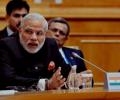
The announcement of Modi's visit comes a day after India and China ended their 73-day standoff in Dokalam by withdrawing their troops from the area.

The BRICS Youth Ministers' Meeting, organised by India's Sports Ministry, successfully concluded in Visakhapatnam. Presided over by Sports Minister Mansukh Mandaviya, the meeting built upon previous youth engagements, focusing on developing young leaders and promoting youth cooperation among BRICS nations.

Bangladesh has requested India to create a "conducive environment" for Prime Minister Tarique Rahman's potential visit to New Delhi for the BRICS summit, linking it to their demand for the extradition of former prime minister Sheikh Hasina. This comes amidst strained relations following Hasina's media interaction in New Delhi, which Bangladesh deemed offensive, and her subsequent death sentence in absentia for "crimes against humanity." India maintains that the extradition request is under examination and that it had no role in Hasina's media event.

A summit of the world's top five emerging economies - Brazil, Russia, India, China and South Africa -- begins on Saturday in Goa.

Xi brought in asymmetrical power play by stating that India should have 'strategic cognition' and 'strategic judgement made on the basis of the stage of development the two countries are at'. This is a very nuanced way of asserting China's coercive diplomatic posture and reflects Beijing's penchant to unleash border instability at will, restrict rare earth metal exports, exert pressure on India at global and regional orders, asserts China expert Srikanth Kondapalli.

Ahead of President Vladimir Putin's visit to India for the BRICS summit, Russia has expressed support for New Delhi's peace initiatives to resolve the Ukraine conflict. Discussions between Putin and PM Modi will cover defence, energy, technology, and the repatriation of Indian nationals from the Russian military, alongside addressing trade and investment ties.
India has reiterated that any code of conduct for the South China Sea must align with international maritime law, particularly the UN Convention on the Law of the Sea (UNCLOS). This statement comes as China and ASEAN continue negotiations on a pact for the contested region, where concerns over China's expansive claims and military activities persist.

India's Ministry of External Affairs spokesperson Randhir Jaiswal stated that India desires positive, constructive, and forward-looking ties with Bangladesh and is ready to discuss all bilateral issues. This comes amidst queries regarding the state of relations following a change in Bangladesh's government and upcoming international engagements.

China Southern Airlines is set to resume its Guangzhou-New Delhi passenger service from September 21, ending a six-year suspension. This move is part of a broader normalisation of India-China relations, following recent high-level diplomatic meetings and previous flight resumptions by other carriers.

Prime Minister Narendra Modi hosted Iranian President Masoud Pezeshkian in New Delhi for talks focusing on the West Asia situation, bilateral relations, and BRICS cooperation. The meeting, Pezeshkian's first visit to India as president, comes amidst heightened tensions in West Asia due to new US sanctions on Iran and concerns over global oil supplies from the Strait of Hormuz. Both leaders emphasised regional stability and economic resilience.

Bangladesh's Home Minister Salahuddin Ahmed will skip the first-ever BIMSTEC home ministers' meeting in New Delhi, with a senior bureaucrat leading the delegation. This absence underscores strained India-Bangladesh ties, particularly following the ouster of the Sheikh Hasina government in August 2024 and Dhaka's request for her extradition from India.

Rahul Gandhi, Leader of Opposition, met Malaysian Prime Minister Anwar Ibrahim for a breakfast meeting in New Delhi to discuss India-Malaysia relations. The meeting, also attended by Priyanka Gandhi Vadra, followed earlier talks between PM Narendra Modi and Ibrahim on trade, semiconductors, infrastructure, and defence. Malaysia is a key partner for India within BRICS and ASEAN.

National Security Advisor Ajit Doval is in Beijing for the 25th round of Special Representatives talks on the India-China boundary issue with his Chinese counterpart Wang Yi. These crucial discussions precede Chinese President Xi Jinping's anticipated visit to India for the BRICS summit, offering a potential opportunity for a meeting with Prime Minister Narendra Modi. The talks aim to address the long-standing border dispute and recurring tensions, with both sides emphasising the importance of peace and tranquillity for bilateral relations amidst recent reports of aggressive Chinese posturing in Arunachal Pradesh.
Prime Minister Narendra Modi was all smiles on his first international multilateral engagement. At the BRICS summit, Modi talked tough and said that the five countries -- Brazil, Russia, India, China and South Africa --should show no tolerance towards terrorism.

Prime Minister Manmohan Singh on Wednesday met Chinese President Xi Jinping on the margin of the BRICS Summit in Durban, in the first structured high-level contact between the two countries since the change of leadership in China.
an President Dimitry Medvedev, Chinese President Hu Jintao, Brazil President Dilma Rousseff and South African President Jacob Zuma will participate in the summit hosted by Prime Minister Manmohan Singh.

India has condemned an attack on a Panama-flagged oil tanker off the coast of Oman, which resulted in one Indian seafarer going missing and 13 others being rescued. The Ministry of External Affairs is closely monitoring the situation and coordinating with Omani authorities for search and rescue operations, while also reiterating calls for de-escalation and safe navigation in the region.
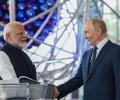
Putin expressed concern over the situation in Gaza, and said Palestinian President Mahmoud Abbas has been invited to BRICS events.

The highlight of the first BRICS Summit on the African soil is the possible setting up of a development bank for undertaking infrastructure and development projects.

Bangladesh has not yet decided on Prime Minister Tarique Rahman's visit to India for the upcoming BRICS summit, with his office stating that Dhaka is awaiting New Delhi's response to its request for the extradition of deposed prime minister Sheikh Hasina and other 'fugitive criminals' currently residing in India.

Russian President Vladimir Putin has proposed a new investment platform, based on the New Development Bank (NDB), to fund projects in trade, infrastructure, logistics, and technology across BRICS nations, emphasising that the grouping's expanding economic cooperation is not 'against anyone' but aims to advance members' national interests.

Prime Minister Narendra Modi arrived in Fortaleza on Monday to attend a summit meeting of the BRICS nations that will address regional crises and security threats to restore a climate of peace while advancing global economic stability.

Sports Minister Mansukh Mandaviya will chair a two-day meeting of BRICS Sports and Youth Ministers in Visakhapatnam, aiming to strengthen cooperation in youth affairs and sports, with a focus on sports manufacturing, indigenous disciplines, and youth development.

Ahead of Gandhi Jayanti, People for the Ethical Treatment of Animals India (PETA India) has sent a letter to Union Minister for Information and Broadcasting Ashwini Vaishnaw calling for a nationwide prohibition on billboards, television, online and other advertisements for meat, beginning on October 2.

Engagement with neighbours has gathered pace, particularly as the conflict in West Asia has exposed their vulnerability to energy supply disruptions.

Russian Foreign Minister Sergey Lavrov has publicly supported India's bid for a permanent seat on the United Nations Security Council. He stated that any reform of the UNSC should not grant additional seats to Western countries like Germany and Japan, citing their "militarism and revanchism." Instead, Russia advocates for increased representation from Asia, Africa, and Latin America, specifically backing India and Brazil, while also emphasizing the need to address African interests.
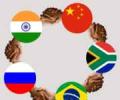
The forth coming summit of the BRICS leaders in New Delhi would focus on stimulating growth to avert the down turn in global economy besides enhancing financial cooperation among the countries, China said.

India has stated that the situation along the Line of Actual Control (LAC) is disturbed by Chinese forces diverging from established patrolling patterns, emphasising that maintaining peace and tranquillity is essential for bilateral relations. This statement follows remarks by the ITBP Director General about ongoing confrontations. Both nations are utilising diplomatic and military mechanisms to resolve issues and improve LAC understanding. Recent high-level talks between Prime Minister Narendra Modi and Chinese President Xi Jinping have focused on rebuilding trust and respect after the 2020 Galwan clashes, including a disengagement pact for Depsang and Demchok.
